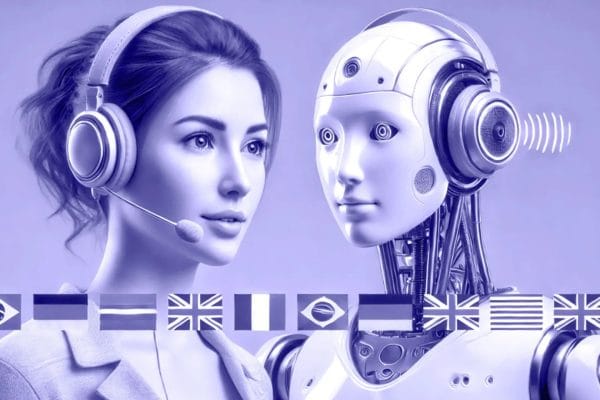
While the quality of automated language translation is constantly improving, seeking a professional human translator—one who understands culture, context, and linguistic nuance—remains the wisest choice. Computer programs are simply incapable of replicating the complex judgment required for high-quality translation.
The core issue lies in a simple question: How can a machine objectively evaluate the quality of its own output? Since human evaluators often disagree on which translation is superior, a computer program lacks the sophisticated critical capacity to make such judgments.
The limitations of machine translation can be broken down into five key areas:
1. The Cultural Gap
No machine translation tool can be programmed to inherently grasp the cultural dimension of the target language.
- Example: The Spanish verb coger means “to take” in Spain. However, in many parts of South America, it is a highly offensive vulgarity referring to sexual intercourse. A machine, unaware of this regional cultural context, would translate the term literally, leading to significant offense.
2. Failure to Handle Slang and Evolving Language
Machine translators are terrible at keeping up with slang, evolving terminology, and sometimes proper names. MT often defaults to a literal, word-for-word translation, missing the intended meaning.
- Example: Translating the English sentence, “The con was sentenced to life in the state pen,” the machine might render the slang terms “con” (convict) and “pen” (penitentiary) as their non-slang equivalents, meaning “scam/fraud” and “ink pen.” A human translator immediately recognizes the need for contextually appropriate Spanish equivalents, such as estafador (con) and prisíon or penetenciaría (pen).
3. Inability to Recognize Linguistic Nuance
Only a human can recognize subtle linguistic nuances that machines miss. Professional translation often requires finding the most appropriate equivalents to achieve the best overall meaning and tone. As seen in the previous example, a human would select semantically appropriate words based on the context of crime and incarceration, ensuring the professional quality of the text.
4. Weakness in Contextual Linking
Machine translation performs poorly when asked to link words to their surrounding context.
- Example: The English word “home” can be literal, as in “We go home,” or part of an idiomatic expression, as in “We home in on a solution.” Without human intervention, the machine’s failure to recognize this contextual difference can quickly derail the flow and content of the entire document.
5. Designed as a Tool, Not a Replacement
Ultimately, the programmers who create machine translation software design it to assist human translators, not replace them. No machine-generated translation is considered final or approved without “the impact of a human hand” to review, correct, and refine the output, ensuring the required levels of accuracy and cultural appropriateness.