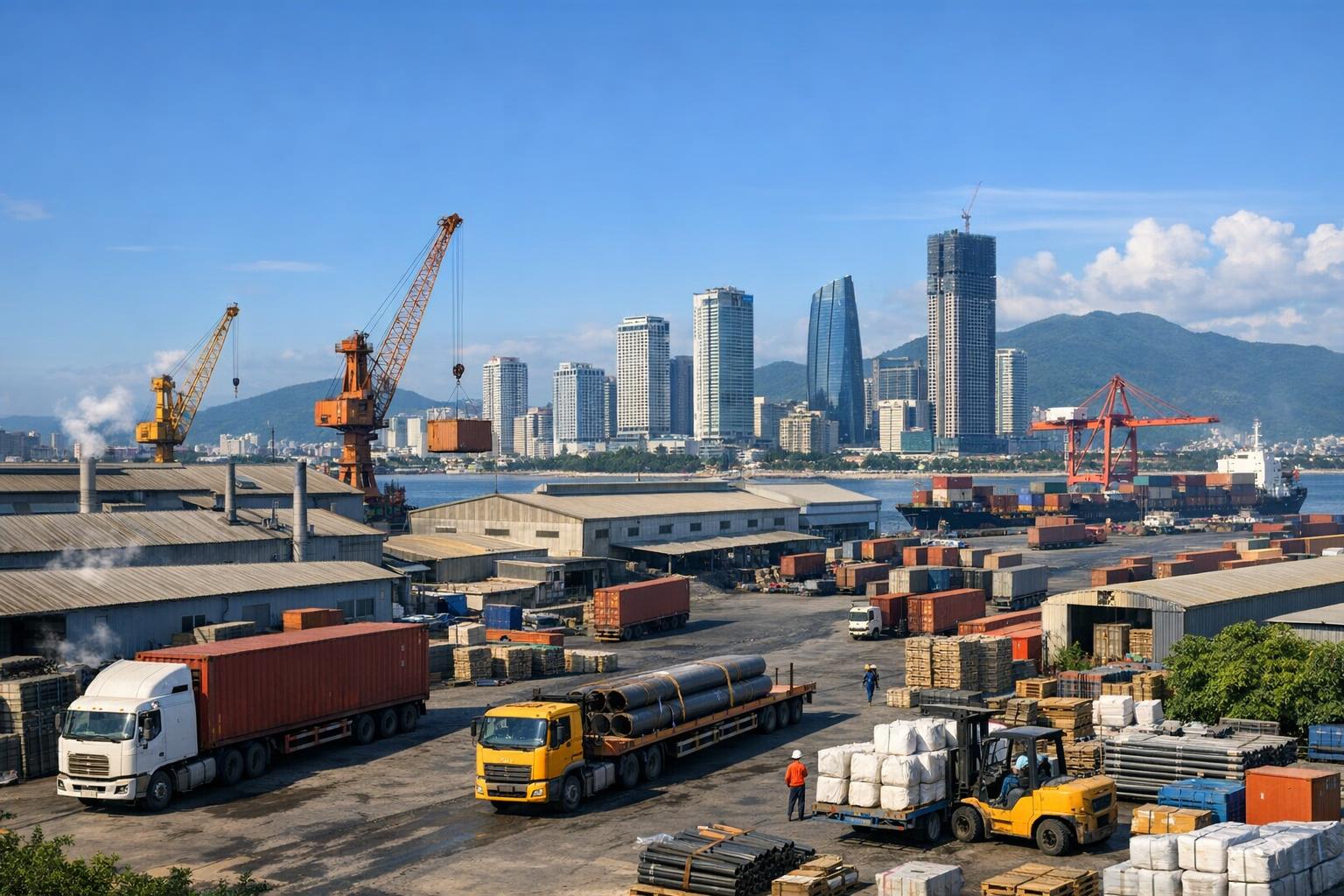
Vietnam’s Emerging Investment Appeal Amid Global Economic Shifts
As global supply chains realign and investors seek resilient, cost-effective markets, Vietnam increasingly commands attention. Its strategic location in Southeast Asia, combined with a dynamic economic reform agenda, positions the country as a compelling destination for foreign direct investment (FDI). Yet, the decision to invest in Vietnam requires more than recognizing headline growth figures—it demands a nuanced understanding of which cities offer the best opportunities, the realities of labor costs and skills, and the operational challenges that can impact returns.
Urban Centers: More Than Just Ho Chi Minh City and Hanoi
While Ho Chi Minh City and Hanoi dominate discussions about Vietnam’s economic hubs, a broader landscape of emerging cities merits consideration. Da Nang, for instance, has transformed from a modest port city to a tech and tourism hotspot, leveraging improved infrastructure and international connectivity. Its targeted incentives for high-tech industries attract companies seeking lower urban congestion and rising costs in the major cities.

Hai Phong, close to the northern industrial triangle, offers deep-water port access and a burgeoning manufacturing base, particularly in automotive and electronics sectors. Bac Ninh, though smaller, excels as a hub for electronics manufacturing with the presence of global giants like Samsung and Canon, reflecting how specialized industrial parks can create localized ecosystems of innovation and efficiency.
These cities illustrate Vietnam’s decentralization trend in investment, where proximity to supply chains, infrastructure readiness, and sector-specific clusters can outweigh sheer market size.
Labor Dynamics: Balancing Cost, Skill, and Productivity
Vietnam’s labor force remains a key competitive advantage. According to the General Statistics Office of Vietnam, the average monthly wage in manufacturing hovered around $250 in 2023, significantly lower than neighboring Thailand or China’s coastal provinces. This cost advantage is coupled with a demographic dividend: approximately 56% of the population is under 35, fueling a workforce that is both young and trainable.
However, the narrative of “cheap labor” risks oversimplification. Investors must weigh the availability of skilled workers in target industries. For example, electronics and automotive sectors require not just manual labor but also technicians and engineers proficient in quality control and process optimization. Cities such as Da Nang and Bac Ninh have invested heavily in vocational training centers and partnerships with multinational firms to upskill workers, enhancing productivity and reducing turnover.
Additionally, labor law reforms increasingly protect workers’ rights, which while positive socially, introduce complexities around overtime, contracts, and union activities. Foreign investors should integrate comprehensive human resources strategies to navigate these evolving regulations effectively.
Infrastructure and Regulatory Environment: Navigating Practical Barriers
Infrastructure quality varies markedly across Vietnam’s cities. Ho Chi Minh City and Hanoi benefit from extensive road networks, international airports, and digital connectivity, yet both grapple with traffic congestion and rising real estate costs. Emerging cities like Hai Phong and Da Nang are improving rapidly but require careful due diligence on logistics capabilities and utility reliability.
Regulatory transparency and bureaucratic efficiency remain ongoing challenges. Recent government efforts to streamline business registration and licensing processes have reduced lead times, but navigating local authorities still demands cultural sensitivity and patience.
Case Study: Electronics Manufacturing in Bac Ninh
Bac Ninh’s rise as an electronics manufacturing hub exemplifies the interplay of location, labor, and incentives. Samsung’s multi-billion-dollar investments have catalyzed a cluster of suppliers and service providers, creating a localized ecosystem that elevates skill levels and accelerates innovation diffusion. The city’s focus on vocational training ensures a steady pipeline of semi-skilled and skilled labor, reducing recruitment costs and boosting operational efficiency for investors.
Implications for Translation and Localization Services
For international investors entering Vietnam’s diverse market, clear communication across languages and legal frameworks is essential. Engaging with professional translation services ensures accuracy in contract negotiation, compliance documentation, and workforce training materials. Furthermore, understanding translation service pricing upfront helps in budgeting and managing multilingual content without compromising quality.
As AI technologies reshape language services globally, Vietnam’s translation sector is also evolving. Yet, the complexity of investment documentation and the need for cultural nuance underscore the ongoing value of human expertise alongside technological tools.
Understanding the Socioeconomic and Environmental Trade-offs in Vietnam’s Investment Landscape
While Vietnam’s rapid economic growth and investment potential are widely celebrated, an underexplored yet critical dimension is the socioeconomic and environmental trade-offs that accompany this development. Investors often focus on cost efficiencies, market access, and labor availability, but the broader implications of industrial expansion and urbanization must be carefully considered to ensure sustainable and responsible investment outcomes.
Causes and Drivers of Trade-offs
Vietnam’s accelerated industrialization, particularly in manufacturing hubs like Bac Ninh, Hai Phong, and Da Nang, is driven by export-oriented growth policies and foreign direct investment incentives. This has led to rapid urban expansion, increased factory density, and intensified resource consumption. The government’s push for economic zones and industrial parks has created economic clusters but also concentrated environmental pressures such as air and water pollution, waste management challenges, and strain on local infrastructure.
Simultaneously, the influx of workers from rural areas into cities contributes to demographic shifts that affect housing, social services, and community cohesion. While young labor pools fuel productivity, rapid urban population growth can outpace the development of adequate living conditions, leading to informal settlements and social disparities.
Real-World Implications for Investors and Communities
For investors, these trade-offs translate into tangible risks and opportunities. Environmental degradation may trigger stricter regulatory scrutiny, increased compliance costs, or reputational damage if corporate social responsibility (CSR) standards are not upheld. For example, factories that neglect wastewater treatment may face sanctions or community pushback, disrupting operations.
Conversely, companies that proactively engage with environmental management and community development can enhance their social license to operate, attract better talent, and foster long-term sustainability. This includes investing in cleaner technologies, waste reduction initiatives, and supporting local infrastructure improvements.
From the community perspective, industrial growth can bring employment and improved incomes but may also exacerbate inequalities and environmental health concerns. Balancing these outcomes requires collaboration between investors, local governments, and civil society to align economic objectives with social welfare and ecological preservation.
Practical Trade-offs and Strategic Considerations
Investors must navigate trade-offs between short-term cost advantages and long-term sustainability. For instance, selecting sites near urban centers may reduce logistics costs but increase exposure to environmental regulations and community activism. Alternatively, investing in less developed areas may offer land and labor cost savings but require additional infrastructure investment and engagement to build local capacity.
Moreover, adopting sustainable practices may initially increase capital expenditures but can lead to operational efficiencies, risk mitigation, and brand enhancement over time. Integrating environmental, social, and governance (ESG) criteria into investment decisions is increasingly recognized as essential to managing these complexities.
Future Opportunities: Towards Sustainable and Inclusive Growth
Vietnam’s commitment to sustainable development, reflected in its national strategies and international agreements, presents emerging opportunities for investors. Green technologies, renewable energy projects, and circular economy initiatives are gaining traction. Companies that align with these trends can access incentives, reduce environmental footprints, and position themselves as leaders in responsible investment.
Furthermore, leveraging technology to monitor supply chains, optimize resource use, and enhance transparency can improve compliance and stakeholder trust. Collaborative platforms involving government, industry, and academia can foster innovation ecosystems that balance economic growth with environmental stewardship.
In addition, social investment programs that support education, healthcare, and community infrastructure can strengthen workforce quality and social stability, creating a more resilient investment environment.
Ultimately, recognizing and addressing these socioeconomic and environmental trade-offs enriches the strategic insight necessary for successful investment in Vietnam. It transforms investment from a purely financial calculation into a holistic engagement with the country’s developmental trajectory, benefiting both investors and the communities they operate within.
Integrating Digital Transformation and Innovation Ecosystems in Vietnam’s Investment Strategy
One crucial but underexplored dimension in Vietnam’s investment landscape is the accelerating role of digital transformation and innovation ecosystems as key drivers of sustainable competitive advantage. While cost and labor factors have traditionally dominated investment considerations, the evolving global economy increasingly rewards agility, technological adoption, and innovation capacity. Understanding how Vietnam’s digital infrastructure and innovation clusters interplay with investment decisions offers investors a more comprehensive framework for long-term success.
Causes and Catalysts of Digital Integration
Vietnam’s government has prioritized digital economy development through initiatives such as the “National Digital Transformation Program” which aims to digitize public services, promote e-commerce, and foster innovation-driven enterprises. This policy environment encourages the proliferation of startups, technology parks, and research institutions, particularly in urban centers like Ho Chi Minh City, Hanoi, and Da Nang. For readers exploring this area, translation service pricing offers additional context.
Multinational corporations are also contributing to this momentum by investing in R&D centers and digital manufacturing capabilities, leveraging Vietnam’s young, tech-savvy workforce. The rise of Industry 4.0 technologies—such as automation, Internet of Things (IoT), and artificial intelligence (AI)—is gradually transforming traditional manufacturing hubs into smart factories, enhancing productivity and quality control.
Real-World Implications for Investors
Investors who incorporate digital transformation into their operational strategies can unlock multiple benefits: improved supply chain visibility, predictive maintenance, data-driven decision-making, and enhanced customer engagement. For example, electronics manufacturers in Bac Ninh are increasingly adopting automated assembly lines and real-time analytics to reduce defects and optimize throughput.
Furthermore, digital platforms facilitate better collaboration between suppliers, distributors, and regulators, streamlining compliance and reducing transaction costs. This digital maturity can serve as a differentiator in attracting further investment and talent, as well as in meeting global buyer requirements for transparency and sustainability.
However, integrating digital technologies also entails challenges such as cybersecurity risks, the need for workforce reskilling, and initial capital outlays. Investors must balance these considerations against anticipated gains, ensuring that digital adoption aligns with broader business objectives and local capabilities.
Community and Workforce Impact
The digital shift also influences labor dynamics, requiring new skill sets and fostering higher-value employment opportunities. Vocational training programs in cities like Da Nang are adapting curricula to include digital literacy, robotics, and data analytics, helping to bridge the skills gap.
At the community level, improved digital infrastructure can enhance access to education, healthcare, and public services, contributing to inclusive development. Moreover, digital platforms enable more effective stakeholder engagement and corporate social responsibility initiatives, reinforcing social license to operate.
Strategic Trade-offs and Future Opportunities
Investors face trade-offs between the speed of digital adoption and the readiness of local ecosystems. Rapid implementation without adequate workforce preparation or infrastructure may lead to operational disruptions and social tensions. Conversely, gradual integration with capacity building can foster sustainable innovation cultures and resilient supply chains.
Looking ahead, Vietnam’s growing emphasis on digital economy policies, coupled with increasing foreign investment in tech sectors, presents opportunities to pioneer smart manufacturing, fintech, and e-commerce ventures. Collaborative innovation hubs that unite government, academia, and private sector players can accelerate technology diffusion and create synergistic value chains.
By proactively embedding digital transformation within investment strategies, companies can future-proof operations, enhance competitiveness, and contribute to Vietnam’s broader economic modernization goals.
Looking Ahead: Strategic Investment Requires Integrated Insight
Vietnam’s investment potential is undeniable, anchored by promising urban centers and a competitively priced labor force that is steadily gaining skills. However, realizing this potential demands a strategic approach that weighs urban dynamics, labor realities, infrastructure, regulatory environments, and the accelerating digital transformation holistically. Investors who combine local knowledge with robust language services and workforce planning will be best positioned to capitalize on Vietnam’s evolving landscape.
Future trends suggest that as Vietnam’s cities mature and labor costs rise, value will increasingly derive from innovation ecosystems, technology adoption, and workforce development. Foreign investors should anticipate this evolution, integrating long-term human capital strategies and leveraging professional language solutions to maintain agility in a complex, dynamic market.