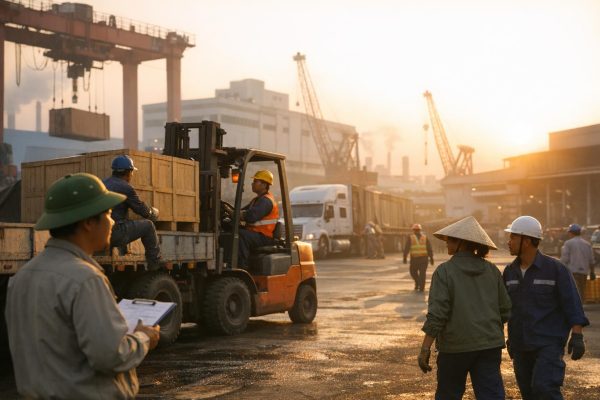
Vietnam’s Investment Landscape in 2024: Beyond the Surface
Vietnam’s allure as an investment destination has intensified in recent years, driven by its robust economic growth, strategic location, and demographic advantages. Yet, the decision of where and how to invest within Vietnam demands nuanced understanding. This article unpacks the investment potential Vietnam 2024 by examining the comparative advantages of various cities, dissecting labor cost structures, and highlighting practical considerations for foreign investors navigating this dynamic market.
The Urban Investment Equation: Choosing the Right Vietnamese City
Vietnam is not a monolith; its cities differ markedly in infrastructure quality, industrial focus, regulatory environment, and labor market characteristics. Investors aiming to capitalize on Vietnam’s growth must dissect these differences carefully.

Ho Chi Minh City: The Commercial Powerhouse
As Vietnam’s largest metropolis and economic hub, Ho Chi Minh City (HCMC) offers unparalleled access to financial services, international logistics, and a vibrant consumer base. Its well-developed industrial zones and proximity to key ports make it ideal for manufacturing and export-oriented ventures.
However, these advantages come with higher real estate and labor costs compared to other regions. Skilled labor in technology, finance, and services commands premium wages, reflecting the city’s rising living standards. For foreign investors with capital-intensive projects and a need for specialized talent, HCMC remains a top contender.
Hanoi: Political Capital with Growing Industry
Hanoi, the nation’s political heart, combines governmental proximity with expanding industrial clusters, especially in electronics, software, and education sectors. Its labor force benefits from strong educational institutions, producing a steady stream of technical graduates.
Labor costs in Hanoi are generally lower than in HCMC, particularly in semi-skilled and entry-level roles, presenting cost advantages for investors focusing on assembly or service operations. Yet, regulatory navigation may be more complex due to bureaucratic layers and government oversight.
Da Nang and Emerging Secondary Cities
Da Nang and cities like Hai Phong and Can Tho are gaining traction as attractive investment hubs due to improving infrastructure and competitive labor costs. Da Nang’s strategic central location and growing IT sector appeal to software and manufacturing firms seeking alternatives to the oversaturated primary cities.
Secondary cities typically offer incentives such as tax breaks and lower land prices, but investors must weigh these benefits against potentially limited local supplier networks and less mature service ecosystems.
Labor Cost Dynamics: A Competitive Edge with Caveats
Vietnam’s labor cost advantage is often cited as a primary driver for foreign direct investment. According to recent labor market data, average manufacturing wages in Vietnam remain significantly lower than in China, Thailand, and Malaysia, with hourly rates typically ranging from $2 to $4 depending on region and skill level.
This wage gap can translate into substantial operational savings, but it also introduces challenges. The rapid rise in living costs, urban migration, and tightening labor regulations mean wage growth is accelerating, squeezing margins for labor-intensive industries.
Skilled vs. Unskilled Labor: Balancing Quality and Cost
Vietnam’s labor market is bifurcated. While low-cost unskilled labor remains abundant, there is increasing demand for skilled professionals in technology, engineering, and management. Investors must calibrate their labor strategies accordingly.
For example, manufacturing plants requiring precision and quality control are investing in training programs or partnering with local educational institutions to upskill workers—a practice that reduces turnover and improves productivity but requires upfront commitment.
Labor Compliance and Social Responsibility
Beyond wages, compliance with Vietnam’s evolving labor laws and social insurance requirements is critical. International investors face growing scrutiny from both local authorities and global partners on labor standards, workplace safety, and ethical practices.
Failure to engage responsibly can result in fines, reputational damage, or operational disruptions. Conversely, companies that proactively adopt fair labor practices often benefit from improved workforce stability and community goodwill.
Practical Implications for Foreign Investors
Investors eyeing Vietnam must approach their market entry and expansion strategies with a multifaceted lens, balancing cost, quality, infrastructure, and regulatory environment.
- Due diligence on city selection: Analyze sector fit, logistics, labor market conditions, and regulatory climate. For instance, a tech startup may prioritize Hanoi or Da Nang for talent availability, while a manufacturing firm might opt for HCMC or Hai Phong for logistics efficiency.
- Labor cost forecasting: Account for wage inflation trends and factor in training costs. Engaging local HR consultants can provide granular insights into evolving labor market dynamics.
- Leverage local partnerships: Collaborating with Vietnamese firms or educational institutions can ease regulatory navigation and facilitate workforce development.
- Integrate professional translation services early to ensure precise communication across languages and legal documents, which is critical for contracts, compliance, and workforce training materials.
Vietnam’s promising investment environment comes with a complex interplay of factors that require sophisticated strategies beyond mere cost arbitrage. Investors who integrate comprehensive market research, local expertise, and long-term labor planning position themselves to unlock sustainable growth.
Looking Ahead: The Evolving Investment Paradigm
Vietnam’s rapid evolution suggests that the window for low-cost labor arbitrage is narrowing. As automation adoption increases and the labor market matures, investors must shift focus from simply seeking cheap labor to building resilient, innovation-driven operations.
The cities best positioned for future investment will be those that foster ecosystems of skilled labor, quality infrastructure, and transparent governance. Companies that anticipate these shifts and invest in workforce development, technological integration, and cultural fluency will be most competitive.
In this context, professional language services, including those that align with fair and accurate translation service pricing, become indispensable tools for bridging cultural and operational gaps—enabling foreign investors to navigate Vietnam’s complex business environment with confidence and precision.
Deepening the Understanding of Vietnam’s Labor Market Challenges and Opportunities
While Vietnam’s labor cost advantage remains a key attraction, a deeper exploration into the structural challenges and evolving dynamics of the labor market reveals critical nuances that foreign investors must consider for sustainable success.
Causes Behind Labor Market Shifts
Vietnam’s transformation from an agrarian economy to a manufacturing and service-oriented one has been rapid. This shift has driven a significant rural-to-urban migration, swelling the labor pool in major cities but also straining urban infrastructure and housing. The consequent rise in living costs exerts upward pressure on wages, eroding the once-stark cost advantage.
Moreover, government policies aimed at improving workers’ welfare—such as increased minimum wages, expanded social insurance coverage, and stricter enforcement of labor laws—reflect Vietnam’s commitment to social stability and international labor standards. While these measures enhance worker protection, they also increase operational costs for employers.
Simultaneously, Vietnam faces a demographic transition; the working-age population growth is slowing, and the demand for higher-skilled labor is rising as industries move up the value chain. This creates a dual challenge of managing wage inflation while addressing skill shortages.
Real-World Implications for Investors
For labor-intensive industries, the accelerating wage growth and social compliance costs necessitate a reassessment of traditional cost-based investment models. Investors relying solely on low wages risk margin compression and operational disruption if they fail to anticipate these trends.
Conversely, sectors that emphasize automation, digitalization, and innovation can mitigate labor cost pressures by enhancing productivity. For example, electronics manufacturers integrating Industry 4.0 technologies can reduce dependence on unskilled labor while improving quality and throughput.
Understanding local labor market intricacies also affects talent acquisition and retention strategies. High turnover rates, driven by workers seeking better opportunities or improved working conditions, can increase recruitment and training expenses. Companies investing in employee engagement, career development, and workplace safety often see improved retention and productivity—factors that directly impact the bottom line.
Community Impact and Corporate Social Responsibility
Vietnamese communities are increasingly aware of the social and environmental footprint of foreign investments. Companies that neglect community engagement or labor welfare risk backlash, protests, or regulatory penalties, which can disrupt operations and damage reputations.
On the other hand, investors who integrate corporate social responsibility (CSR) initiatives—such as supporting local education, healthcare, and environmental sustainability—can build goodwill and foster a stable operating environment. This not only enhances brand image but can also lead to preferential treatment from local authorities and smoother regulatory processes.
Practical Trade-Offs and Strategic Choices
Investors face complex trade-offs between cost, quality, and compliance. Opting for lower-cost labor markets in secondary cities may reduce wage expenses but could introduce challenges related to lower skill availability, weaker supplier networks, and less developed infrastructure. Conversely, investing in primary cities offers access to skilled labor and better facilities but at higher costs.
Moreover, the decision to invest in workforce development—through training programs or partnerships with educational institutions—requires upfront capital and time but yields long-term benefits in productivity and quality. Similarly, embracing automation involves significant initial investment but can future-proof operations against wage inflation and labor shortages.
Future Opportunities: Navigating the Transition
As Vietnam’s labor market evolves, investors who adopt a forward-looking approach stand to gain competitive advantage. Opportunities lie in sectors aligned with Vietnam’s industrial upgrading strategy, such as high-tech manufacturing, renewable energy, and digital services.
Developing integrated talent pipelines, leveraging government incentives for technology adoption, and engaging in sustainable business practices will be critical. Furthermore, the growing emphasis on environmental, social, and governance (ESG) criteria globally means that investors demonstrating responsible labor and community engagement will attract better financing terms and partnerships.
In sum, while Vietnam’s labor cost advantage remains a compelling factor, the nuanced realities of wage inflation, labor quality, compliance, and social expectations require investors to adopt sophisticated, multi-dimensional strategies. This deeper understanding not only mitigates risks but also unlocks pathways for sustainable, inclusive growth in Vietnam’s dynamic investment landscape.
Integrating Cultural and Linguistic Competence in Investment Strategies
One often underexplored yet critical dimension in successful investment in Vietnam is the integration of cultural and linguistic competence throughout the investment lifecycle. Beyond economic metrics and regulatory frameworks, understanding and respecting Vietnam’s rich cultural fabric and communication nuances can significantly influence operational effectiveness and community relations.
Causes and Importance of Cultural Competence
Vietnam’s business culture is deeply rooted in Confucian values emphasizing respect, hierarchy, and relationship-building (known locally as quan hệ). These cultural dimensions affect negotiations, decision-making processes, and daily workplace interactions. Misunderstandings or neglect of these subtleties can lead to mistrust, misaligned expectations, and operational inefficiencies.
Language barriers compound these challenges. While English proficiency is growing, especially among younger professionals and in urban centers, many local stakeholders—including government officials, suppliers, and workers—communicate primarily in Vietnamese. Precise translation and interpretation services are therefore indispensable for contracts, compliance documents, training materials, and stakeholder communications.
Real-World Implications for Investors
Foreign investors who underestimate the importance of cultural and linguistic alignment risk costly delays, contractual disputes, and weakened partnerships. For instance, ambiguous translations can lead to misinterpretation of legal obligations or safety protocols, exposing companies to regulatory penalties or workplace accidents.
Conversely, companies that invest in culturally adapted communication strategies foster stronger relationships with employees, government bodies, and local communities. This can translate into smoother regulatory approvals, enhanced employee morale, and greater community support.
Community Impact and Long-Term Benefits
Respectful engagement that honors local customs and language not only mitigates conflict but also supports social cohesion. When communities perceive investors as culturally sensitive and communicatively transparent, they are more likely to collaborate in development initiatives and advocate for the company’s presence.
Moreover, culturally competent companies can better tailor their corporate social responsibility programs to local needs, enhancing their social license to operate and contributing to inclusive growth.
Practical Trade-Offs and Strategic Integration
Integrating cultural and linguistic competence requires upfront investment in professional translation services, cultural training for expatriate managers, and hiring bilingual local staff. While these measures increase initial costs, they reduce risks of miscommunication and foster operational resilience.
Balancing these investments with other priorities—such as automation or workforce training—requires strategic planning. However, the synergy of technical excellence and cultural fluency positions investors to navigate Vietnam’s complex business environment more effectively.
Future Opportunities: Enhancing Competitiveness through Cultural Intelligence
Looking ahead, as Vietnam continues to integrate into global value chains, cultural intelligence will become a competitive differentiator. Companies that leverage advanced language technologies, local cultural insights, and inclusive communication frameworks will unlock deeper market access and innovation potential.
Furthermore, as Vietnam diversifies its economy and attracts a broader spectrum of foreign investors, culturally attuned operations will facilitate cross-sector collaborations and sustainable partnerships.
In conclusion, embracing cultural and linguistic competence is not merely a soft skill but a strategic imperative. It complements economic and technical considerations, enabling investors to build trust, ensure compliance, and foster long-term success in Vietnam’s vibrant investment landscape.