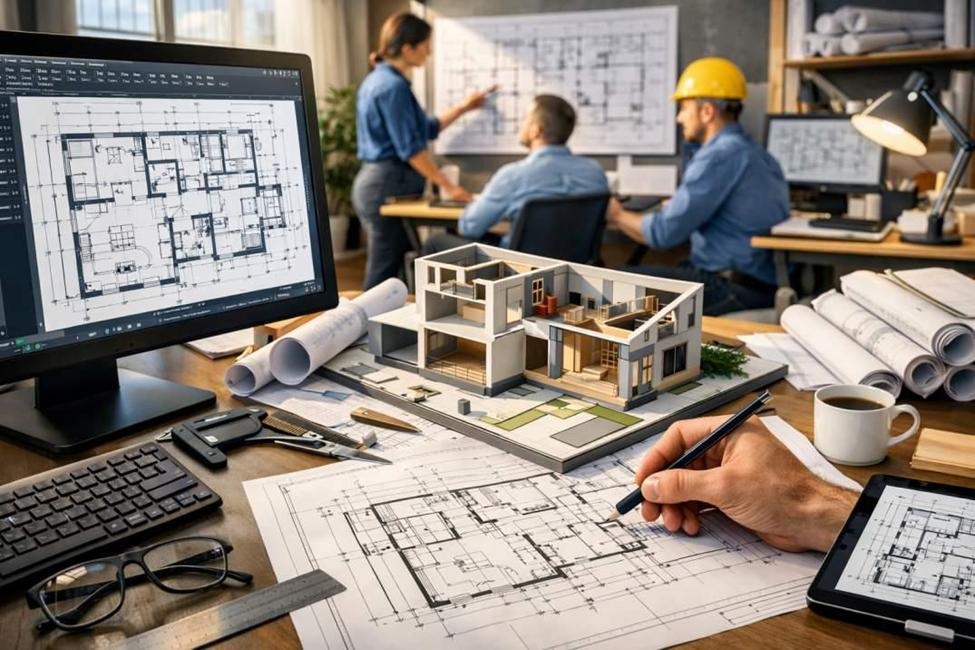
International construction projects depend on more than architectural expertise and engineering capabilities. They also require accurate communication between professionals who may work in different languages, use different technical conventions, and operate under different regulatory frameworks.
This challenge becomes particularly significant when large collections of engineering drawings, design specifications, and construction documents must be translated without compromising their technical meaning.
A recent collaboration involving Interprotrans and TECO Architecture & Construction illustrates the importance of specialized language services in managing approximately 1,000 pages of construction-related technical documentation.
Construction projects bring together architects, structural engineers, mechanical and electrical specialists, project managers, contractors, and equipment suppliers. Each discipline contributes information that must be understood accurately by the other participants.
A minor misunderstanding in a general business document may cause inconvenience. In technical documentation, however, an incorrectly interpreted instruction, material specification, or equipment description can create operational difficulties and require additional clarification.
For this reason, professional construction translation is not simply a process of replacing words from one language with their equivalents in another. It requires an understanding of the engineering context, document structure, and intended application.
A single construction project may include architectural plans, structural calculations, electrical layouts, plumbing diagrams, ventilation specifications, and fire protection documentation.
Although these documents belong to the same project, they use distinct terminology and technical conventions. Translators must recognize these differences to avoid ambiguous expressions and maintain consistency across disciplines.
Clear multilingual documentation allows project participants to review specifications, understand design requirements, and coordinate technical decisions more effectively.
It also supports document traceability when different teams need to refer to the same engineering information throughout a project’s development.
In Vietnam’s educational infrastructure sector, TECO Architecture & Construction’s educational facility design and construction services address the requirements of schools, language centers, and international education providers.
TECO specializes in architectural consulting, interior design, engineering coordination, and turnkey construction solutions. Its project experience includes work associated with educational organizations such as Apollo English, VIA English Academy, Horizon International School, EMASI Plus, and IGS.
Educational facilities present distinctive design considerations. Classrooms must support teaching activities, circulation areas must accommodate students and staff, and building systems must contribute to a comfortable learning environment.
TECO’s One-Stop Solution brings multiple stages of project development together, from site assessment and architectural planning to interior fit-out, mechanical and electrical engineering, construction, and regulatory assistance.
This integrated model is particularly relevant for education providers planning new campuses or expanding their networks, where consistent design standards and coordinated implementation can help simplify project management.
A coordinated construction process relies on accurate drawings and specifications. Architectural layouts, equipment schedules, engineering details, and construction instructions form a shared reference for professionals involved in project delivery.
When these documents are used by international stakeholders, specialized translation can become an important component of the broader communication process.
The translation assignment involving Interprotrans and TECO covered approximately 1,000 pages of technical materials, including AutoCAD-related documentation.
A project of this size introduces challenges that are less prominent in smaller translation assignments. Terminology must remain consistent across hundreds of pages, document references need careful attention, and translated annotations must remain understandable within their technical context.
Engineering terminology frequently contains abbreviations, specialized equipment names, and expressions whose meaning depends on the surrounding technical context.
A structured terminology framework helps translators maintain consistent language choices throughout a large collection of documents.
AutoCAD drawings present additional considerations because written information often appears alongside dimensions, symbols, reference codes, and graphical elements.
Translated text may occupy more space than the original. As a result, annotation placement and readability require attention to avoid obscuring important drawing information.
Numerical values, drawing references, and equipment identifiers should also be distinguished from text requiring translation, helping preserve the integrity of the technical information.
Large technical assignments benefit from a structured review process that considers terminology, completeness, formatting, and consistency.
For the TECO assignment, meeting the agreed delivery schedule was an important project outcome. The completed work demonstrates the practical value of coordinating specialized language resources for substantial construction documentation requirements.
The value of engineering documentation extends beyond the initial construction stage. Once a facility becomes operational, drawings and technical records remain useful for maintenance planning, equipment servicing, troubleshooting, and future modifications.
Facility management teams may need to consult electrical schematics, plumbing layouts, ventilation drawings, equipment manuals, and other records to understand installed systems.
In addition to its design and construction activities, TECO provides solutions associated with building maintenance and facility upkeep, addressing the continuing needs of properties after their initial development.
For educational institutions, reliable maintenance contributes to the long-term usability of classrooms, administrative spaces, and essential building systems.
Accurate technical records can support these activities by providing a clearer understanding of the facility’s design and installed infrastructure.
Technical translation is most effective when language expertise is combined with familiarity with industry-specific documentation.
For construction companies working with international clients and consultants, access to professional translation services can support communication without requiring engineering teams to handle every language-related task internally.
The collaboration between Interprotrans and TECO illustrates how specialized translation services can complement architectural and engineering capabilities.
By completing the approximately 1,000-page assignment within the agreed schedule, Interprotrans contributed to the documentation needs of a business operating in a technically demanding industry.
Interprotrans provides professional technical translation services for engineering and construction documents, supporting businesses that work with multilingual information.
Relevant document categories include architectural drawings, CAD annotations, mechanical and electrical specifications, construction contracts, tender documentation, equipment manuals, and technical operating instructions.
As international collaboration continues to shape the construction industry, the ability to communicate complex technical information clearly remains an important part of successful project coordination.
The Interprotrans-TECO collaboration provides a practical example of how language services can support engineering documentation, helping bridge communication requirements across specialized professional environments.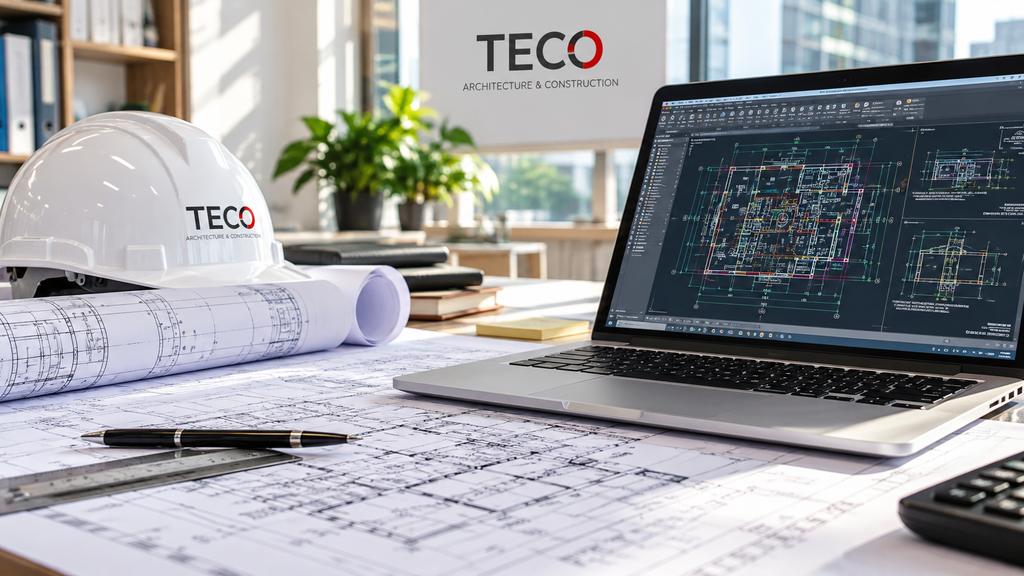
MULTILINGUAL CONSTRUCTION DOCUMENTATION: HOW INTERPROTRANS SUPPORTED TECO’S 1,000-PAGE TECHNICAL PROJECT
1. WHY LANGUAGE ACCURACY MATTERS IN INTERNATIONAL CONSTRUCTION
1.1. Different disciplines, different terminology
1.2. Communication across project teams
2. TECO ARCHITECTURE & CONSTRUCTION: DEVELOPING MODERN EDUCATIONAL FACILITIES
2.1. An integrated approach to project delivery
2.2. The role of technical documentation
3. MANAGING A 1,000-PAGE TECHNICAL TRANSLATION ASSIGNMENT
3.1. Building a consistent terminology framework
3.2. Working with CAD-based information
3.3. Quality control across large document collections
4. TECHNICAL DOCUMENTATION CONTINUES TO MATTER AFTER CONSTRUCTION
5. THE VALUE OF SPECIALIZED TRANSLATION PARTNERSHIPS
6. INTERPROTRANS: LANGUAGE SOLUTIONS FOR ENGINEERING AND CONSTRUCTION