Interpreters as Silent Guardians of Confidentiality in Vietnam’s Boardrooms
In Vietnam’s fast-evolving business landscape, where global CEOs negotiate multimillion-dollar deals behind closed doors, interpreters occupy a unique position of trust and responsibility. More than mere conduits of language, they are discreet custodians of corporate secrets and nuanced cultural brokers. The stakes are exceptionally high: a single mistranslation or breach of confidentiality in a private discussion can jeopardize multimarket partnerships or derail investment negotiations.
International companies entering Vietnam’s complex business ecosystem increasingly recognize that selecting the right interpreting partner goes beyond language fluency. It demands proven expertise in industry-specific terminology, deep cultural intelligence, and an unwavering commitment to confidentiality. This article unpacks the multifaceted role of interpreters in private CEO-level meetings, drawing on documented examples and practical insights to guide businesses in securing trust and precision in their high-stakes discussions.

Confidentiality: The Interpreter’s Invisible Mandate
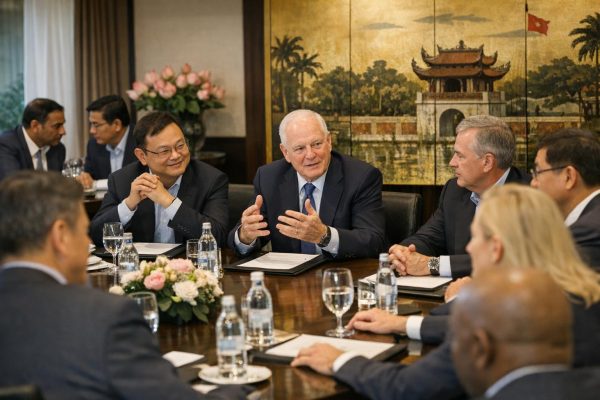
CEO meetings typically involve sensitive topics such as merger terms, intellectual property licensing, strategic market entry plans, or financial disclosures. Interpreters in these settings must handle proprietary information with the utmost discretion. Unlike public conferences or trade shows, private meetings impose stringent confidentiality expectations, often formalized through nondisclosure agreements (NDAs).
Consider the case of a multinational technology firm negotiating a joint venture with a leading Vietnamese manufacturer. The interpreter, privy to product designs and future strategies, must exercise caution in every utterance. Any inadvertent disclosure—even outside the meeting room—can have severe legal and reputational consequences.
Experienced interpreters adhere to strict ethical codes, including secure handling of documentation and refraining from discussing meeting content post-assignment. Companies should verify interpreter credentials, insist on signed confidentiality agreements, and engage agencies offering well-established data protection protocols.
Industry Terminology: Precision in Specialized Language
High-level business discussions often revolve around technical jargon, financial instruments, or sector-specific lexicons. Interpreters must not only be bilingual but also bilingual specialists in relevant fields such as finance, manufacturing, technology, or energy.
For example, during a negotiation involving a renewable energy project in Vietnam’s industrial zones, interpreters must fluently render terms related to power purchase agreements, tariff structures, and regulatory frameworks. Misinterpretation can cause costly misunderstandings or delays.
Professional interpreters prepare extensively by reviewing client materials, industry reports, and prior meeting transcripts. Many also collaborate with specialist glossaries and terminological databases tailored to Vietnam’s regulatory environment. This preparation ensures accuracy and supports fluid communication between CEOs and their local counterparts.
Cultural Intelligence: Navigating Vietnam’s Business Etiquette
Beyond language, cultural intelligence is a subtle yet critical dimension of interpreting in Vietnam. Business communication here is often indirect, layered with politeness conventions, hierarchical respect, and nuanced nonverbal cues.
Interpreters must decode these cultural signals and convey not only words but underlying intentions. For instance, a Vietnamese executive’s hesitant phrasing or deferential tone might signal disagreement or reservation, which the interpreter needs to communicate sensitively to the foreign CEO without breaching diplomacy.
Moreover, understanding the local context of negotiation styles, gift-giving customs, and decision-making protocols helps interpreters facilitate smoother interactions. This cultural mediation fosters mutual trust and reduces the risk of miscommunication escalating into conflict.
Case Study: Facilitating a Confidential Investment Discussion
In early 2024, a European private equity CEO conducted a series of discrete meetings with Vietnamese government officials and business leaders concerning a potential acquisition in the manufacturing sector. The interpreting team assigned was chosen for its expertise in investment terminology, fluency in legal discourse, and prior experience with sensitive negotiations.
The interpreters’ role extended beyond instant translation to advising the delegation on local customs and ensuring that confidential documents exchanged were handled appropriately. Their professionalism was noted as a key factor enabling the CEO to confidently explore deal structures without hesitation.
Selecting Interpreting Services for High-Stakes CEO Meetings in Vietnam
- Verify confidentiality protocols: Confirm NDAs, secure communication channels, and data handling standards.
- Assess industry expertise: Ensure interpreters have proven knowledge of relevant sectors and terminology.
- Evaluate cultural competence: Choose interpreters skilled in Vietnam’s business etiquette and cross-cultural nuances.
- Request client references and case histories: Prior experience with executive-level assignments is invaluable.
- Consider simultaneous vs. consecutive interpreting: Depending on meeting format, select the mode that best balances accuracy and discretion.
- Discuss translation and interpretation rates: Transparent fees help align expectations without compromising quality.
International companies often underestimate the complexity of interpreting in confidential CEO meetings. Engaging professional interpreting services with holistic capabilities mitigates risks and enhances trust among stakeholders.
Emerging Trends: Technology’s Complementary Role
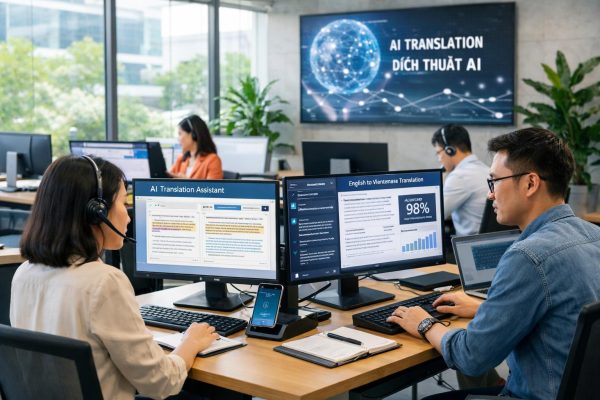
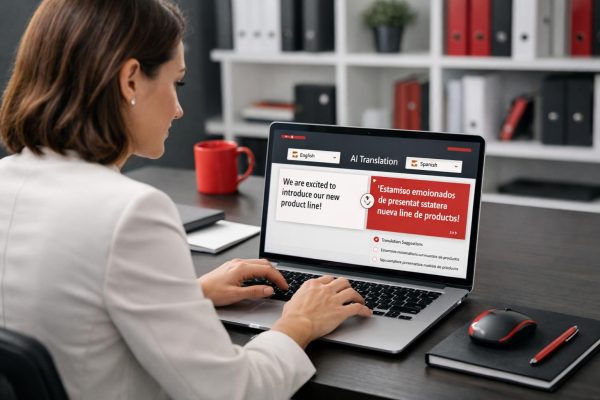
While AI-powered translation tools grow more sophisticated, they currently cannot replicate the interpreter’s nuanced judgment or uphold confidentiality with the same rigor. Recent industry insights emphasize that professional interpreters remain indispensable in sensitive negotiations, where context and discretion are paramount.
Some agencies integrate secure digital platforms for glossary sharing and preparation, enhancing interpreter readiness without compromising privacy. Yet, human expertise continues to drive the quality and trustworthiness of CEO-level communication in Vietnam.
Looking Ahead: Interpreters as Strategic Enablers
As Vietnam’s economy attracts further global investment and complex partnerships, the demand for interpreters who combine discretion, cultural intelligence, and domain mastery will intensify. Companies that invest in trusted language partnerships position themselves to navigate high-stakes discussions with confidence and strategic clarity. The interpreter’s role transcends words—they are integral to building bridges of trust that underpin successful global business leadership in Vietnam.
International firms entering Vietnam should prioritize collaborating with interpreting services that demonstrate a track record in confidentiality, industry knowledge, and cultural fluency. Doing so transforms language facilitation from a transactional necessity to a strategic asset that safeguards sensitive information while enabling precise and effective dialogue at the highest executive levels.
Deepening the Role of Interpreters in Managing Confidentiality Risks
While the article highlights confidentiality as a fundamental responsibility of interpreters, the nuanced challenges of managing confidentiality risks in Vietnam’s unique business environment warrant deeper exploration. The causes of confidentiality breaches in interpreting extend beyond simple human error; they often arise from complex interactions between cultural norms, legal frameworks, and operational practices within organizations.
Firstly, Vietnam’s business culture, which values relationship-building and informal communication channels, can inadvertently increase the risk of sensitive information leakage. Interpreters may find themselves in social situations outside formal meetings—such as business dinners or informal gatherings—where the boundaries between professional confidentiality and personal rapport blur. Without clear guidelines and strong ethical discipline, interpreters might unintentionally disclose sensitive details, even when motivated by goodwill or cultural expectations of openness.
Secondly, the evolving legal landscape in Vietnam around data protection and corporate secrecy presents practical challenges. Unlike some Western jurisdictions with well-established laws and enforcement mechanisms, Vietnam’s regulatory environment is still maturing. This creates ambiguity about the legal consequences of confidentiality breaches, potentially weakening deterrence and complicating contractual protections such as NDAs. Interpreters and companies must therefore navigate a patchwork of regulations, often requiring proactive internal controls and robust contractual safeguards to mitigate risks.
Thirdly, the operational trade-offs between interpreter accessibility and security can impact confidentiality. For example, using freelance interpreters without stringent vetting or relying on remote interpreting platforms lacking end-to-end encryption can expose sensitive discussions to interception or unauthorized access. Conversely, highly secure arrangements—such as in-person interpreting by vetted professionals within controlled environments—may increase logistical complexity and cost. Companies must balance these considerations based on the sensitivity of the meeting and the value of the information at stake.
Understanding these causes is vital for international firms seeking to protect their strategic interests in Vietnam. The real-world implications of confidentiality breaches extend beyond immediate financial losses; they can erode trust with local partners, damage reputations in a tightly networked business community, and invite regulatory scrutiny that hampers future operations.
From the reader’s perspective, grasping the multifaceted nature of confidentiality risks enhances their ability to make informed decisions when selecting interpreting services. Beyond verifying credentials and NDAs, companies should implement comprehensive risk management strategies that include interpreter training on confidentiality protocols tailored to Vietnam’s cultural and legal context, secure handling of digital and physical documents, and clear communication of expectations. For readers exploring this area, professional interpreting services offers additional context.
Furthermore, the community impact of upholding strict confidentiality standards in interpreting resonates beyond individual transactions. It contributes to raising the overall professionalism of language services in Vietnam, fostering a business environment where discretion is respected and valued. This, in turn, attracts higher-quality international investment and encourages knowledge transfer through protected dialogues.
Looking ahead, there are promising opportunities to enhance confidentiality management through innovative practices. For instance, interpreter agencies can develop specialized confidentiality certification programs that combine ethical training with practical security measures adapted to Vietnam’s market. Additionally, leveraging secure collaborative technologies—such as encrypted cloud platforms for glossary sharing and real-time communication—can support interpreters while maintaining privacy.
Another future avenue involves integrating interpreters more closely into corporate governance frameworks. By positioning interpreters as strategic partners rather than transactional service providers, companies can embed confidentiality responsibilities into broader compliance and risk management systems. This holistic approach not only safeguards sensitive information but also empowers interpreters to contribute insights on cultural and communication nuances that influence confidentiality dynamics.
Balancing Confidentiality with Transparency: Practical Trade-offs and Strategic Considerations
While confidentiality is paramount in CEO-level meetings, it is essential to recognize the practical trade-offs that arise when striving to maintain absolute discretion. Interpreters and companies must navigate a delicate balance between protecting sensitive information and enabling transparent, effective communication that fosters trust among all parties.
One key challenge lies in the tension between interpreter accessibility and information security. Highly restricted access to interpreters—such as limiting their involvement solely to closed-door discussions—may safeguard confidentiality but can inadvertently reduce the interpreter’s ability to clarify ambiguous statements or cultural nuances in real time. This can lead to misunderstandings that compromise deal outcomes. Conversely, granting interpreters broader access to preparatory materials and informal discussions enhances their contextual understanding but increases exposure to sensitive data.
Another consideration involves the mode of interpreting. Simultaneous interpreting allows for rapid communication flow but requires interpreters to process complex information instantly, increasing cognitive load and the risk of errors or omissions. Consecutive interpreting, while slower, offers opportunities for clarification and ensures greater accuracy, which can be critical when handling confidential content. Companies must evaluate which approach best aligns with the meeting’s confidentiality requirements and communication dynamics.
Moreover, the integration of technology introduces both opportunities and vulnerabilities. Secure digital platforms facilitate glossary sharing and remote collaboration, enhancing interpreter preparation and consistency. However, reliance on electronic devices and internet connectivity raises concerns about data breaches and unauthorized surveillance. Implementing robust cybersecurity measures and contingency plans is therefore indispensable.
Strategically, companies should consider interpreters as integral members of the negotiation team rather than external service providers. This paradigm shift encourages investment in interpreter training, inclusion in pre-meeting briefings, and ongoing dialogue about confidentiality protocols and cultural sensitivities. Such collaboration fosters mutual accountability and elevates the quality of communication.
Finally, transparency with all stakeholders about confidentiality measures builds confidence and mitigates suspicion that may arise from overly secretive practices. Clear communication about interpreter roles, data handling procedures, and ethical commitments reassures partners and regulators alike, supporting smoother negotiation processes.
By thoughtfully balancing confidentiality with transparency, international firms can leverage interpreters not only as language facilitators but as strategic enablers of trust, precision, and successful outcomes in Vietnam’s complex business environment.