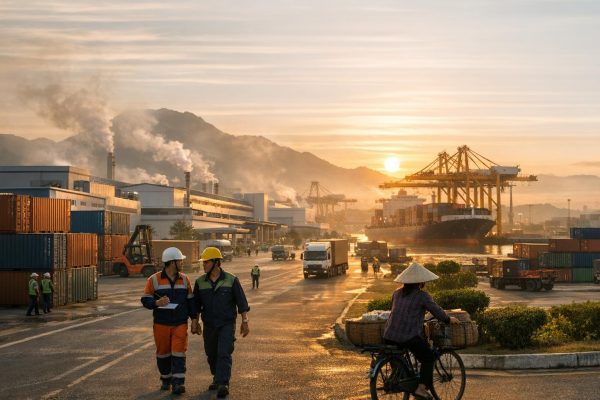
Vietnam’s Investment Landscape: More Than Just Emerging Market Potential
Vietnam has long been recognized as a rising star in Southeast Asia’s economic landscape, but 2026 marks a period where its investment advantages crystallize beyond the traditional narratives of low-cost labor and rapid GDP growth. Foreign investors now face a more complex environment shaped by comprehensive regulatory reforms, accelerated infrastructure development, and shifting regional trade dynamics.
Regulatory Reform and Ease of Doing Business: Beyond the Numbers
One of the most tangible advantages for foreign investors in Vietnam today is the government’s sustained commitment to regulatory reform. Since 2023, Vietnam has streamlined bureaucratic procedures, reducing the average company registration time by nearly 30%, according to data from the World Bank’s Doing Business index. These reforms reflect a strategic pivot toward transparency and investor protection, which are essential for risk-averse international capital.

However, while headline statistics show progress, practical challenges remain. Local governance inconsistencies and uneven application of regulations across provinces can complicate operations, especially for small and medium enterprises (SMEs) unfamiliar with Vietnam’s decentralized administrative structure. For instance, foreign investors in the manufacturing sector have reported variable experiences in securing environmental permits, an area where local interpretation of national laws varies.
Addressing these challenges requires nuanced local expertise and often benefits from partnership with Vietnamese legal firms or consulting groups adept at navigating provincial nuances. This highlights a practical implication: foreign investors must invest in localized due diligence and ongoing compliance monitoring rather than relying solely on generalized reform narratives.
Human Capital: A Double-Edged Sword
Vietnam’s young, tech-savvy workforce is frequently cited as a core investment advantage. With a median age below 32 and over 60% of the population under 35, the country offers a vibrant talent pool ready to engage with digital transformation and innovation-driven sectors.
Yet, this demographic advantage coexists with the challenge of skill mismatches. While universities produce a high volume of graduates annually, sectors like advanced manufacturing, software development, and precision engineering report shortages in specialized skills, including English proficiency and project management capabilities.
To illustrate, a recent survey by the Vietnam Chamber of Commerce and Industry indicated that 45% of manufacturing enterprises struggled to recruit qualified engineers with foreign language skills in 2025. This gap underscores why foreign investors increasingly prioritize in-house training programs and partnerships with educational institutions to tailor skill development aligned with their operational needs.
Infrastructure: Bridging the Gap Between Ambition and Reality
Vietnam’s aggressive infrastructure development plans, backed by both public investment and foreign capital, are reshaping the investment calculus. The completion of major expressways connecting key industrial zones with seaports has reduced logistics costs by an estimated 15% over the past two years.
Similarly, upgrades to international airports and container terminals enhance Vietnam’s connectivity within the ASEAN region and beyond. The Long Thanh International Airport project near Ho Chi Minh City, for example, is poised to be a game-changer, projected to handle over 100 million passengers annually upon completion, significantly easing the burden on Tan Son Nhat Airport.
Nonetheless, infrastructure disparities remain between northern, central, and southern regions, with the northern and southern economic hubs enjoying far better facilities than many central provinces. Investors targeting emerging industrial clusters should assess localized infrastructure readiness carefully, factoring in potential hidden costs related to transport delays, power reliability, and digital connectivity.
Trade Agreements: Leveraging Vietnam’s Regional Integration
Vietnam’s strategic participation in numerous free trade agreements (FTAs), including the Comprehensive and Progressive Agreement for Trans-Pacific Partnership (CPTPP) and the EU-Vietnam Free Trade Agreement (EVFTA), offers preferential access to key markets. These FTAs reduce tariffs and open avenues for export-oriented foreign investors, particularly in electronics, textiles, and agriculture.
Yet, maximising these trade benefits requires strict adherence to rules of origin and compliance standards, which can be administratively demanding. For example, companies must demonstrate a certain percentage of local content or regional value addition to qualify for tariff reductions, necessitating robust supply chain management and documentation processes.
This environment elevates the importance of specialized support services, including professional translation services, to accurately manage complex contractual and regulatory documentation. Such services minimize the risk of costly compliance errors and help maintain smooth cross-border operations.
Technology Adoption and Digital Transformation: Catalysts for Future Growth
Vietnam’s digital economy is expanding rapidly, supported by government initiatives promoting Industry 4.0 adoption and e-government services. The language services sector itself is witnessing transformation through AI-powered solutions integrated with human expertise, as highlighted in recent industry analyses.
For foreign investors, embracing these technological shifts offers efficiency gains and competitive differentiation. Companies leveraging digital platforms for supply chain management, customer engagement, and workforce training stand to benefit from cost reductions and enhanced scalability.
Nonetheless, investors must be vigilant about cybersecurity risks and data privacy regulations, which are evolving in tandem with digital growth. Navigating this landscape requires not only technical investment but also collaboration with local partners experienced in compliance and risk management.
Practical Implications for Foreign Investors
- Localized Expertise Is Essential: Understanding provincial regulatory variations and infrastructural realities can prevent operational bottlenecks.
- Investment in Human Capital Pays Dividends: Developing targeted training programs and partnerships with educational institutions can close skill gaps and foster workforce loyalty.
- Leverage Trade Agreements Strategically: Meticulous supply chain and compliance management are prerequisites to unlocking tariff benefits.
- Integrate Technology Thoughtfully: Digital transformation should balance efficiency with robust data governance and security measures.
The Role of Language Services in Facilitating Vietnam Investment
As Vietnam’s investment landscape becomes more sophisticated, the role of language services transcends basic translation. Precise communication in legal, technical, and financial documentation is critical to navigating regulatory frameworks and building trust with local stakeholders.
Foreign investors frequently engage professional translation services to handle complex contract negotiations, regulatory filings, and corporate communications. High-quality language solutions reduce misunderstandings and expedite approval processes, contributing to smoother market entry and ongoing operations.
Companies such as Interprotrans language services have positioned themselves as trusted partners by combining linguistic expertise with cultural and industry knowledge. This integration is particularly valuable in sectors like manufacturing, technology, and finance, where specialized terminology and compliance requirements demand accuracy and nuance.
Addressing Environmental and Social Governance (ESG) in Vietnam’s Investment Landscape
While much of the discourse around Vietnam’s investment advantages centers on economic and infrastructural factors, an increasingly critical yet underexplored dimension is the role of Environmental and Social Governance (ESG) criteria in shaping sustainable foreign investment. As global investors become more attuned to ESG imperatives, Vietnam’s evolving regulatory environment and market expectations around environmental protection, social responsibility, and corporate governance are beginning to influence investment decisions profoundly.
Causes and Drivers of ESG Focus in Vietnam
Vietnam’s rapid industrialization and urbanization have led to mounting environmental challenges, including air and water pollution, waste management issues, and biodiversity loss. Concurrently, social concerns such as labor rights, community impacts, and equitable development have gained prominence. International pressure, alongside domestic advocacy, has pushed the Vietnamese government to incorporate ESG principles into policy frameworks, such as the Green Growth Strategy and the National Action Plan on Sustainable Development.
Additionally, foreign investors—particularly those from Europe, North America, and East Asia—are increasingly required by their home jurisdictions or institutional mandates to demonstrate ESG compliance. This external impetus motivates companies to seek investment opportunities in Vietnam that align with global sustainability standards.
Implications for Foreign Investors
Integrating ESG considerations presents both challenges and opportunities for investors. On the one hand, compliance with environmental regulations, labor standards, and governance norms may increase upfront costs and operational complexity. For example, manufacturing investors must now navigate stricter environmental impact assessments and community consultation processes, which can delay project timelines if not properly managed.
On the other hand, a robust ESG strategy can enhance brand reputation, reduce regulatory risks, and improve access to capital, particularly from ESG-focused funds. Investors adopting best practices in energy efficiency, waste reduction, fair labor practices, and transparent governance are better positioned to secure long-term operational licenses and community acceptance.
Moreover, Vietnam’s government has begun offering incentives for green investments, including tax breaks and expedited approvals for renewable energy projects and environmentally friendly manufacturing. This policy direction signals growing alignment between national priorities and global sustainability trends.
Community Impact and Social License to Operate
Beyond regulatory compliance, foreign investors must consider the social dimension of their operations. Projects that actively engage local communities, contribute to social development, and respect cultural contexts are more likely to gain enduring support. This social license to operate is critical in Vietnam’s diverse and sometimes sensitive regional settings.
For instance, infrastructure projects in rural or ethnic minority areas require careful stakeholder engagement to mitigate displacement risks and preserve cultural heritage. Similarly, labor-intensive sectors must uphold fair wages, safe working conditions, and opportunities for workforce development to avoid reputational damage and labor disputes.
Practical Trade-Offs and Strategic Approaches
Balancing ESG ambitions with cost and operational efficiency involves practical trade-offs. While green technologies and social initiatives may entail higher initial investments, they often yield savings through energy efficiency, reduced waste, and enhanced employee retention. Investors must conduct rigorous ESG risk assessments during due diligence and integrate these findings into project design and management.
Partnerships with local NGOs, government agencies, and community groups can facilitate ESG compliance and social impact mitigation. Additionally, leveraging digital tools for environmental monitoring and transparent reporting can improve governance and stakeholder confidence.
Future Opportunities in ESG-Aligned Investment
Vietnam’s evolving ESG landscape presents promising opportunities for investors willing to pioneer sustainable business models. Renewable energy, circular economy initiatives, green building, and sustainable agriculture are sectors poised for growth under supportive policies and rising market demand.
Furthermore, as ESG reporting standards become more standardized globally, early adopters in Vietnam can gain competitive advantages by demonstrating compliance and leadership. This positioning not only attracts capital but also aligns with the country’s broader vision of sustainable development and integration into global value chains.
In sum, incorporating ESG considerations into investment strategies is no longer optional but a strategic imperative in Vietnam’s 2026 investment environment. Foreign investors who proactively engage with environmental stewardship, social responsibility, and transparent governance will enhance their resilience and contribute meaningfully to Vietnam’s sustainable economic future.
Looking Ahead: Vietnam’s Investment Environment in a Global Context
Vietnam’s investment advantages in 2026 are rooted not only in its internal reforms and demographic strengths but also in its ability to adapt to a volatile global economic environment marked by supply chain realignments and geopolitical tensions. As multinational companies diversify production bases away from traditional hubs, Vietnam’s combination of strategic location, improving infrastructure, and trade integration positions it as a compelling alternative.
However, to fully capitalize on these advantages, foreign investors must approach Vietnam with a strategic, informed mindset—integrating local knowledge, investing in human capital, and leveraging professional support services. The future of investment success in Vietnam hinges on this sophisticated engagement rather than superficial cost arbitrage.
As the language solutions industry evolves in parallel, incorporating AI enhancements balanced by expert human oversight, the ability to communicate complex business and regulatory information clearly will become a defining factor in sustaining competitive advantage. This synergy between investment trends and language services underscores a broader transformation unfolding in Vietnam’s economic ecosystem.